
Overview
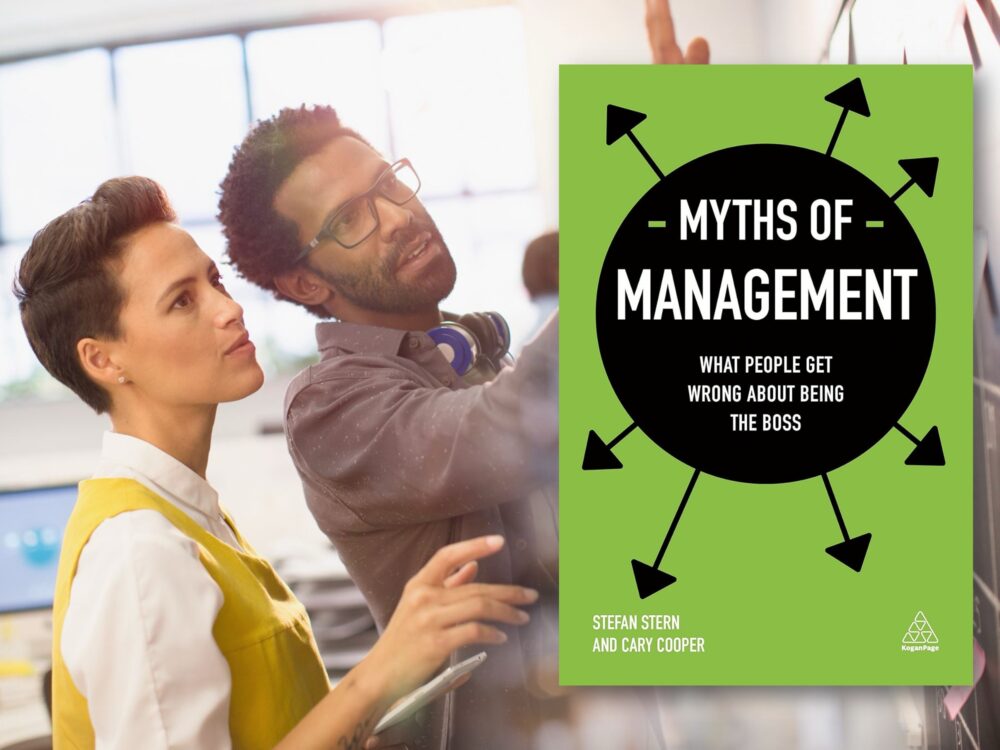
“Myths of Management: What People Get Wrong About Being the Boss” by Stefan Stern and Cary Cooper is a compelling exploration of common misconceptions in the world of management. The book delves into 44 myths that often mislead managers, such as the belief that working longer hours leads to success or that showing vulnerability is a sign of weakness. Through engaging anecdotes and evidence-based insights, Stern and Cooper debunk these myths, offering practical advice to help managers navigate the complexities of leadership with a more informed and realistic approach.
The authors draw on extensive research and real-world examples to provide a practical guide for both new and experienced managers. By challenging over-simplifications and damaging habits, the book encourages readers to adopt a more enlightened perspective on management, ultimately aiming to improve workplace practices and foster a healthier organisational culture.
Synopsis
The book “Myths of Management: What People Get Wrong About Being the Boss” by Stefan Stern and Cary Cooper consists of 288 pages and is divided into 44 chapters, each addressing a specific myth about management.
- Myth 1: There is one right way to lead or manage – This chapter challenges the idea that there is a single best method for leadership or management. The authors argue that effective management requires flexibility and adaptation to different situations and personalities.
- Myth 2: It’s tough at the top – The authors debunk the myth that leadership positions are inherently more difficult and stressful than other roles. They argue that while leadership has its challenges, it also offers unique opportunities and rewards.
- Myth 3: Long hours will lead to success – This chapter dispels the belief that working long hours is a prerequisite for success. The authors present evidence showing that productivity and well-being are often compromised by excessive work hours.
- Myth 4: It’s important not to show vulnerability or doubt – The authors challenge the notion that leaders must always project confidence and certainty. They argue that showing vulnerability and acknowledging doubt can build trust and credibility.
- Myth 5: It’s lonely at the top – This chapter addresses the belief that leaders must navigate their roles in isolation. The authors argue that building strong networks and seeking support from peers and mentors can alleviate the loneliness often associated with leadership positions.
- Myth 6: You need to be the smartest person in the room – The authors debunk the idea that leaders must have all the answers and be the most knowledgeable person in the room. They argue that effective leadership involves leveraging the strengths and expertise of the entire team. This chapter explores the value of humility, curiosity, and continuous learning.
- Myth 7: Hierarchy is finished – This chapter challenges the belief that hierarchical structures are outdated and ineffective. The authors argue that while rigid hierarchies can stifle innovation, some level of structure is necessary for coordination and accountability.
- Myth 8: Consistency is essential – The authors challenge the notion that consistency is always a virtue in leadership. They argue that flexibility and adaptability are often more important, especially in dynamic environments.
- Myth 9: Only hire people who will fit in – This chapter debunks the idea that cultural fit should be the primary criterion for hiring. The authors argue that diversity of thought and experience can drive innovation and better decision-making.
- Myth 10: Leadership is more important than management – The authors challenge the belief that leadership is inherently superior to management. They argue that both roles are essential and complementary. This chapter explores the different skills and responsibilities involved in leadership and management, and how they contribute to organisational success.
- Myth 11: You have to pay top dollar to get the right person – This chapter dispels the belief that high salaries are the only way to attract top talent. The authors argue that factors like organisational culture, opportunities for growth, and work-life balance can be equally or more important.
- Myth 12: Annual appraisals help you manage performance – This chapter debunks the belief that annual performance appraisals are effective in managing employee performance. The authors argue that these reviews can often be counterproductive, creating stress and anxiety rather than fostering improvement. They suggest more frequent, informal feedback sessions as a better alternative to motivate and guide employees.
- Myth 13: Information must be controlled and limited – This chapter challenges the idea that restricting information flow within an organisation is beneficial. The authors emphasise the importance of transparency and open communication in building trust and fostering a collaborative work environment.
- Myth 14: … but women don’t really want top jobs – Here, the authors debunk the stereotype that women are not interested in leadership roles. They explore the systemic barriers that women face in advancing their careers and highlight the importance of creating inclusive policies and cultures that support women’s aspirations to reach top positions.
- Myth 15: Leaders are born, not made – This chapter challenges the notion that leadership is an innate trait that cannot be developed. The authors argue that leadership skills can be learned and honed through experience and education.
- Myth 16: Your first 100 days in a new job are make or break – The authors debunk the myth that the initial period in a new role determines long-term success. They argue that while the first few months are important, ongoing performance and adaptability are more crucial.
- Myth 17: You have to know everything that is going on – This chapter challenges the belief that managers must be omniscient. The authors emphasise the value of delegation and trust in team members to handle responsibilities. They discuss how leaders can focus on strategic oversight rather than getting bogged down in every detail.
- Myth 18: Heroic leaders can change entire organisations on their own – The authors debunk the idea that a single leader can transform an organisation single-handedly. They argue that true organisational change requires collective effort and collaboration.
- Myth 19: The boss with the best strategy wins – This chapter challenges the belief that having the best strategy is the sole determinant of success. The authors argue that execution, adaptability, and organisational culture are equally important.
- Myth 20: It is not possible to work flexibly in senior roles – This chapter dispels the myth that senior roles require rigid, inflexible schedules. It argues that flexibility is not only possible but beneficial for both the individual and the organisation.
- Myth 21: Pay must be kept confidential – This chapter challenges the notion that salary information should be secret. The authors highlight the benefits of pay transparency, such as increased trust and fairness within the organisation.
- Myth 22: Psychology is psychobabble and there’s no need or place for it – Here, the authors debunk the idea that psychology is irrelevant to management. They illustrate how understanding psychological principles can enhance leadership and improve workplace dynamics.
- Myth 23: The robots are coming to take your job – This chapter addresses the fear that automation and artificial intelligence will render human jobs obsolete. The authors argue that while technology will change the nature of work, it will not eliminate the need for human skills.
- Myth 24: Leadership must be transformational – This chapter challenges the belief that all leaders must be transformational to be effective. The authors discuss different leadership styles and argue that transformational leadership is not always appropriate or necessary.
- Myth 25: Conformity leads to success – Here, the authors debunk the idea that conforming to established norms is the key to success. They argue that innovation and creativity often stem from challenging the status quo.
- Myth 26: Feelings are soft and for losers – This chapter challenges the misconception that emotions have no place in the workplace. The authors discuss the importance of emotional intelligence in leadership and how understanding and managing emotions can enhance decision-making and team dynamics.
- Myth 27: Keep your distance if you want respect – The authors debunk the notion that leaders must maintain a strict distance from their employees to be respected. They argue that building strong, positive relationships with team members can lead to greater respect and a more collaborative work environment.
- Myth 28: Be yourself – it’s all about authenticity – This chapter explores the concept of authenticity in leadership. While being genuine is important, the authors argue that effective leaders must also adapt their behaviour to different situations.
- Myth 29: Date of birth is destiny – Here, the authors challenge the belief that a person’s age determines their capabilities and potential. They argue that age should not be a barrier to opportunity and success, highlighting examples of leaders who have excelled at different stages of their careers.
- Myth 30: People are motivated by money – This chapter debunks the idea that financial incentives are the primary motivator for employees. The authors explore other factors that drive motivation, such as purpose, recognition, and personal growth.
- Myth 31: Fear works and ‘engagement’ is unnecessary – The authors challenge the belief that fear is an effective management tool. They argue that fear-based leadership can have negative long-term effects on employee engagement and performance.
- Myth 32: The business case will always prove persuasive – This chapter addresses the misconception that a strong business case is enough to persuade stakeholders. The authors discuss the importance of emotional and narrative elements in making a compelling argument, and how managers can use these techniques to gain support.
- Myth 33: There’s nothing wrong with the business, there’s just a few rotten apples – The authors debunk the idea that organisational problems are due to a few bad individuals. They argue that systemic issues often underlie these problems and provide strategies for identifying and addressing root causes.
- Myth 34: We have woken up to the problems caused by prejudice – This chapter challenges the belief that organisations have fully addressed issues of bias and discrimination. The authors discuss the ongoing challenges and provide insights on how to create a truly inclusive workplace.
- Myth 35: All the power resides at the top – Here, the authors debunk the notion that decision-making power is solely concentrated at the top of the organisation. They explore how empowering employees at all levels can lead to better outcomes and a more dynamic workplace.
- Myth 36: People will learn if you explain things to them clearly – The authors challenge the belief that clear communication alone is enough to ensure understanding. They discuss the importance of context, engagement, and reinforcement in the learning process.
- Myth 37: You must keep up with all the new management ideas and give them a try – This chapter debunks the idea that constantly adopting new management trends is necessary for success. The authors argue for a more discerning approach to implementing new ideas, focusing on what truly adds value to the organisation.
- Myth 38: You’ve got to talk like a real, serious, grown-up business person. Learn the jargon – The authors challenge the belief that using business jargon is essential for effective communication. They advocate for clear and simple language that enhances understanding and connection.
- Myth 39: You can’t manage people if you can’t see them – This chapter addresses the misconception that remote management is ineffective. The authors provide strategies for managing remote teams successfully and discuss the benefits and challenges of flexible working arrangements.
- Myth 40: Who needs employees anyway? Get with the gig economy – The authors challenge the idea that the gig economy is the future of work. They discuss the limitations and drawbacks of gig work and advocate for the value of stable, long-term employment relationships.
- Myth 41: People hate change – This chapter debunks the belief that people are inherently resistant to change. The authors explore how managers can facilitate change by understanding and addressing the underlying concerns and motivations of their employees.
- Myth 42: Big data will fix everything – The authors challenge the notion that big data is a panacea for all business problems. They discuss the limitations of relying solely on data and advocate for a balanced approach that includes human judgment and intuition.
- Myth 43: A cool office will make everybody more creative – This chapter addresses the misconception that a trendy office environment alone can boost creativity. The authors argue that while the physical workspace is important, fostering a creative culture requires more than just superficial changes.
- Myth 44: There are only 44 things to get wrong – In this final chapter, the authors remind readers that the world of management is complex and ever-evolving. They encourage managers to remain open-minded, continuously learn, and adapt to new challenges and opportunities.
Why you should read it?
“Myths of Management: What People Get Wrong About Being the Boss” by Stefan Stern and Cary Cooper is a compelling read for both the general public and specialised audiences. For the general public, it offers a refreshing and accessible take on the intricacies of management, debunking common misconceptions that affect everyday work life. Its engaging narrative and practical advice make it easy to understand the often misunderstood world of management, helping readers develop a more nuanced view of leadership, workplace dynamics, and personal career growth. The book’s structure, featuring short, digestible chapters, makes it an ideal read for anyone looking to gain insights into effective management without feeling overwhelmed.
For a specialised audience, such as managers, HR professionals, and organisational leaders, “Myths of Management” is a valuable resource that challenges traditional management doctrines with evidence-based insights and real-world examples. It encourages critical thinking and continuous learning, vital for those in leadership positions who want to refine their approach and foster a more productive and positive work environment. The book’s emphasis on debunking myths with practical solutions allows professionals to apply these insights directly to their practices, making it an essential tool for anyone looking to enhance their management skills and improve organisational culture.
Critics and review
The book has received a mix of reviews. On Goodreads, the book has a rating of 3.41 out of 5 stars. Reviewers appreciated the book’s engaging and accessible style, as well as its practical insights into debunking common management myths. However, some readers felt that the content was too simplistic for those already familiar with management concepts.
On Amazon, the book fares better with a rating of 4.5 out of 5 stars. Many reviewers praised the book for its humor, readability, and the valuable lessons it offers for both new and experienced managers. Critics highlighted the book’s ability to challenge conventional wisdom and provide evidence-based alternatives. Overall, the book is well-regarded for its ability to entertain while educating readers on effective management practices.
Verdict
“Myths of Management: What People Get Wrong About Being the Boss” by Stefan Stern and Cary Cooper provides valuable insights and challenges prevalent misconceptions in the world of management. While the book is praised for its engaging style and practical advice, some critics argue that it oversimplifies complex management issues and may not offer new information for seasoned professionals. Nevertheless, its accessible format makes it a useful read for both new managers looking to navigate the complexities of leadership and experienced leaders seeking to refresh their perspective on traditional management practices.
About the authors
Stefan Stern is a seasoned journalist and academic with a focus on business, management, and leadership. He has contributed to prominent publications such as the BBC, Management Today magazine, and the Financial Times, where he served as the management columnist from 2006 to 20102. Stern is currently a Visiting Professor in Management Practice at Bayes Business School, City, University of London, and has held positions such as Director at the High Pay Centre, a think tank studying top pay. He has authored two books: “Myths of Management” (co-authored with Prof Cary Cooper) and “How To Be A Better Leader”. Stern continues to write for the Financial Times, the Guardian, and other publications.
Cary Cooper, Sir Cary Lynn Cooper CBE FAcSS, is a distinguished psychologist and academic specialising in organisational psychology and health. Cooper has held numerous prestigious positions, including President of the Chartered Institute of Personnel and Development and Chair of the Academy of Social Sciences. He has published over 250 books and 300 scholarly articles, including works like “The Healthy Workforce” and “Remote Workplace Culture”. Cooper is also the co-founder of Robertson Cooper, a company dedicated to workplace wellbeing.