
Overview
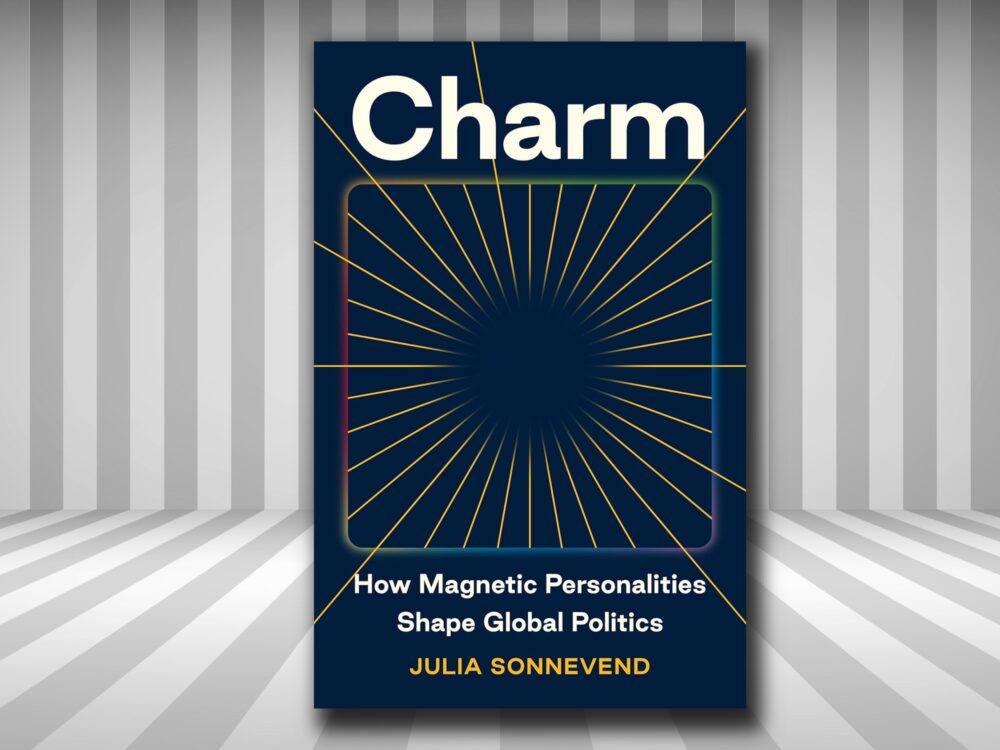
Julia Sonnevend’s “Charm: How Magnetic Personalities Shape Global Politics” explores how charm — not charisma, not policy brilliance, but good old-fashioned likability — has become a central force in global politics. The book argues that charm is a strategic tool, used by politicians across the ideological spectrum to craft relatable personas and sway public opinion, especially in the age of social media.
Rather than focusing on traditional power structures or institutional dynamics, Sonnevend zooms in on individual leaders and their media performances. She examines how charm is deployed, manipulated, and sometimes weaponised to shape international perceptions and influence political outcomes. It’s a fresh lens on political communication, with a dash of sociology and a pinch of media theory.
Synopsis
The book spans 208 pages and is divided into seven chapters, each offering a case study or conceptual insight.
- Charm: A Keyword of Contemporary Global Politics
This chapter lays the groundwork, defining charm as a political tool distinct from charisma. Sonnevend explains how charm operates through media and public performance, often blurring the line between authenticity and manipulation. - Liberal Charm: New Zealand Prime Minister Jacinda Ardern
Ardern’s charm is dissected through her empathetic leadership style and social media presence. Sonnevend shows how her informal videos and relatable persona helped project New Zealand as a progressive and caring nation. - Illiberal Charm: Hungarian Prime Minister Viktor Orbán
Orbán’s case is more complex. Sonnevend explores how he uses charm to soften his authoritarian image, employing cultural references and fatherly imagery to maintain popularity despite controversial policies. - Charm Offensive in Diplomacy: Iranian Foreign Minister Mohammad Javad Zarif
Zarif’s diplomatic charm is analysed through his role in the Iran nuclear negotiations. His public warmth and geniality are shown as strategic moves to reshape Iran’s international image. - Unexpected Charm: North Korean Leader Kim Jong-un
This chapter examines the bizarre yet effective charm tactics of Kim Jong-un. Sonnevend discusses how his media appearances and unexpected friendliness during summits created a surreal but impactful shift in perception (even if temporarily). - Authenticity without Charm: German Chancellor Angela Merkel
Merkel’s lack of charm is presented as a strength. Sonnevend argues that her authenticity and seriousness appealed to voters in a different way, showing that charm isn’t always necessary for political success. - The Power of Charm in Global Politics: A Balancing Act between Seduction and Deception
The final chapter ties everything together, reflecting on the dual nature of charm. Sonnevend warns that while charm can build trust, it can also deceive, making it a risky but potent political asset.
Why You Should Read It
This book is worth reading because it offers a fresh and timely perspective on how political figures shape their public personas. For the general reader, it’s an accessible and engaging look at the personalities behind the headlines. It’s not heavy on jargon, and the case studies are vivid and often surprising.
For scholars and professionals in political science, media studies, or sociology, Sonnevend’s extensive research and interdisciplinary approach provide valuable insights. She draws on media analysis, interviews, and historical context to build her arguments. It’s a thoughtful contribution to understanding the performative nature of modern politics.
Critics and Review
The book has received generally positive reviews, with praise for its originality and relevance. Kirkus called it “timely and illuminating,” while The New Yorker listed it among their best reads of the year. On Amazon, it holds a 3.7-star rating, and Goodreads users have given it a mixed but mostly favourable reception.
That said, some critics have raised eyebrows. A few reviewers found the concept of charm a bit overused, bordering on cliché. Others questioned the inclusion of controversial figures like Kim Jong-un and Orbán, suggesting that their “charm” might be more propaganda than magnetism. There’s also a sense that the book occasionally glosses over deeper political issues in favour of media analysis.
Verdict
Charm is a smart and engaging read that sheds light on a subtle but powerful force in global politics. While not without its flaws, it opens up important conversations about how leaders connect with the public and how that connection can shape the world.
About the Author
Julia Sonnevend is a Hungarian-born associate professor of sociology and communications at The New School for Social Research in New York. Her academic work focuses on media, political communication, and the sociology of global events. She’s known for blending rigorous research with accessible writing, often drawing on her Central European background to inform her global perspective.
Her previous book, Stories Without Borders, explored how the fall of the Berlin Wall became a global media event. Sonnevend is a frequent speaker at international conferences and contributes to journals on media theory and political sociology. Her work bridges cultures and disciplines, offering sharp insights into how narratives shape public life.