

Overview
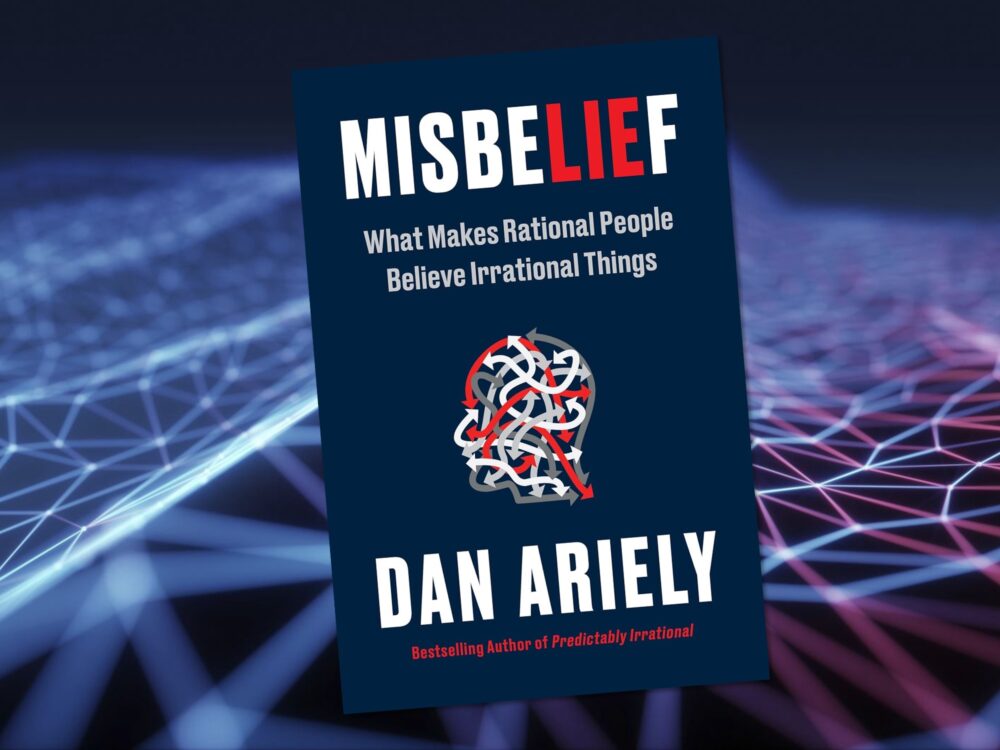
Misbelief by Dan Ariely explores the psychological mechanisms that lead rational individuals to embrace irrational beliefs. Ariely delves into the cognitive biases, emotional triggers, and social influences that drive people towards misinformation and conspiracy theories. He introduces the concept of the “Funnel of Misbelief”, explaining how stress, uncertainty, and a loss of control can push individuals into adopting false narratives. Through compelling anecdotes and rigorous research, the book examines how misbeliefs spread, why they persist, and the broader societal consequences of declining trust and increasing polarisation.
Ariely also offers insights into how we can counteract misbeliefs by fostering critical thinking, intellectual humility, and resilience against cognitive distortions. He discusses the role of personality traits, media influence, and group dynamics in shaping our perceptions of reality. By understanding the psychological foundations of misbelief, readers gain tools to navigate misinformation and engage in more constructive, informed discussions. Misbelief is a thought-provoking exploration of human irrationality, offering valuable perspectives on how to safeguard truth in an era of widespread misinformation.
Synopsis
Dan Ariely’s Misbelief consists of 12 chapters spread across six parts, exploring the psychological, emotional, cognitive, personality, and social factors that drive people towards irrational beliefs.
The introduction sets the stage by explaining why misbelief is a widespread phenomenon and why even sceptical individuals can fall into its trap. Ariely emphasises the importance of understanding misbelief rather than dismissing it outright. He also shares his personal experience of being targeted by conspiracy theorists during the COVID-19 pandemic, when false narratives painted him as part of a sinister plot. This firsthand encounter with misinformation and harassment deepened his interest in the psychology of misbelief, leading him to explore how individuals come to embrace irrational ideas and distrust established truths.
Part I: The Funnel of Misbelief
- Chapter 1, How Could That Person Believe That Thing?, examines the perplexing nature of irrational beliefs, questioning why seemingly rational individuals adopt them. Ariely introduces the concept of the “Funnel of Misbelief,” a gradual process that leads people deeper into misinformation.
- Chapter 2, The Funnel at Work, explores how stress, uncertainty, and social influences push individuals into misbelief. Ariely illustrates how small cognitive shifts accumulate, leading people to embrace increasingly extreme ideas.
Part II: The Emotional Elements and the Story of Stress
- Chapter 3, Pressure, Stress, Bending, and Breaking, discusses how psychological distress makes individuals more susceptible to misinformation. Ariely explains how stress alters cognitive processing, making people more likely to seek comforting but false narratives.
- Chapter 4, Picking a Villain as a Way to Regain Control, explores how people assign blame to external forces or individuals to cope with uncertainty. This chapter highlights how scapegoating reinforces misbelief and deepens distrust.
Part III: The Cognitive Elements and the Story of Our Dysfunctional Information-Processing Machinery
- Chapter 5, Our Search for the Truth We Want to Believe In, examines how cognitive biases shape our perception of reality. Ariely explains how confirmation bias and motivated reasoning lead people to accept misinformation that aligns with their existing beliefs.
- Chapter 6, Working Hard to Believe What We Already Believe, delves into the psychological mechanisms that reinforce misbelief. Ariely discusses how individuals actively defend their false beliefs, rejecting contradictory evidence.
Part IV: The Personality Elements and the Story of Our Individual Differences
- Chapter 7, Lessons on Personality from Alien Abductees, explores how personality traits influence susceptibility to misbelief. Ariely uses unusual case studies to illustrate how certain psychological profiles are more prone to irrational thinking.
- Chapter 8, An Attempt to Classify the Role of Personality in the Funnel of Misbelief, categorises different personality types and their likelihood of falling into misbelief. Ariely discusses how traits like openness, scepticism, and paranoia shape belief systems.
Part V: The Social Elements and the Story of Tribalism
- Chapter 9, Ostracism, Belonging, and the Social Attraction of Misbelief, examines how social exclusion drives individuals towards conspiracy theories and misinformation. Ariely explains how misbelief can create a sense of belonging and identity.
- Chapter 10, The Social Accelerator, explores how social media and group dynamics amplify misbelief. Ariely discusses how echo chambers and online communities reinforce misinformation.
Part VI: Misbelief, Trust, and the Story of Our Future
- Chapter 11, Can We Afford to Trust Again — and Can We Afford Not To?, addresses the consequences of widespread distrust. Ariely explores how rebuilding trust is essential for societal cohesion and combating misinformation.
- Chapter 12, Why Superman Gives Me Hope: A Final Word (Not Really), concludes with a reflection on optimism and resilience. Ariely offers insights into how individuals and societies can counteract misbelief and foster critical thinking.
Why you should read it?
Dan Ariely’s Misbelief is a compelling read for anyone interested in understanding why people embrace irrational beliefs and how misinformation spreads. For the general public, the book offers an accessible and engaging exploration of the psychological forces that shape our thinking, helping readers recognise the subtle cognitive biases that can lead them down the path of misbelief. Ariely’s use of real-world examples, personal anecdotes, and rigorous research makes complex psychological concepts easy to grasp. By reading this book, individuals can develop greater critical thinking skills and a heightened awareness of how stress, social influences, and personality traits contribute to misinformation. In an age where misleading narratives and conspiracy theories are more prevalent than ever, Misbelief equips readers with the tools to navigate conversations with misinformed individuals and resist falling into irrational belief systems themselves.
For specialised audiences, such as psychologists, educators, and media professionals, Misbelief provides deeper insights into the mechanisms that drive misinformation and belief persistence. Academics and researchers can benefit from Ariely’s detailed exploration of cognitive biases and personality traits that predispose individuals to misbelief, while educators can use its findings to shape curricula that promote critical thinking and media literacy. Media professionals and policymakers can gain a better understanding of the role of social networks, group dynamics, and distrust in shaping public perceptions, which can help them develop strategies to combat misinformation more effectively. Ariely’s framework offers valuable perspectives for those working in public discourse, scientific communication, or social intervention.
Critics and review
Dan Ariely’s Misbelief has been well received, with critics praising its insightful exploration of misinformation and the psychological mechanisms behind irrational beliefs. The book has been described as an urgent and thought-provoking examination of how people fall into misbelief, with reviewers highlighting Ariely’s ability to blend rigorous research with engaging storytelling. Kirkus Reviews commended the book as a useful guide for understanding and addressing conspiracy theories, noting its empathetic approach to tackling misinformation. Other critics have emphasised Ariely’s personal experiences with disinformation, which add depth to his analysis and make the book particularly relevant in today’s climate of widespread distrust.
The book has also received endorsements from notable authors such as Yuval Harari and Daniel H. Pink, who praised its relevance and contribution to understanding misinformation. If you’re looking for a book that sheds light on the dangers of misinformation while offering strategies to counter it, Misbelief is certainly worth exploring.
Verdict
Dan Ariely’s Misbelief is a fascinating and timely exploration of how rational individuals fall into the trap of misinformation and conspiracy thinking. Through engaging storytelling and rigorous psychological insights, Ariely unpacks the emotional, cognitive, and social factors that fuel misbelief, offering readers a nuanced understanding of this growing phenomenon. His compassionate approach encourages empathy rather than dismissal, making the book not just an academic study but a valuable tool for fostering constructive dialogue in an increasingly polarised world.
About the author
Dan Ariely is a renowned behavioural economist and psychologist, best known for his research on human irrationality and decision-making. He has held academic positions at institutions such as Duke University and MIT, focusing on how cognitive biases shape economic and social behaviour. His work explores topics like dishonesty, motivation, and consumer behaviour, often using experimental psychology to uncover the hidden forces behind everyday decisions.
Ariely has authored several bestselling books, including Predictably Irrational, The Upside of Irrationality, and The Honest Truth About Dishonesty, which examine how people make seemingly illogical choices and how understanding these tendencies can improve personal and professional decision-making. Beyond academia, he has contributed to various public discourse initiatives, including consulting for businesses and governments on behavioural insights, and co-founding organisations like the Center for Advanced Hindsight, which applies behavioural science to real-world problems.
Despite his influential contributions, Ariely has faced controversy regarding the integrity of some of his research. In 2021, a widely cited study on honesty, which suggested that signing at the top of a form increases truthful reporting, was retracted due to concerns about fabricated data. Investigations revealed inconsistencies in the dataset, leading to scrutiny over Ariely’s role in the research process. While he denied fabricating the data, the incident raised broader questions about research transparency and accountability in behavioural science. Despite these controversies, his work continues to be influential in psychology and economics, shaping discussions on human behaviour and decision-making.




Leave a Reply